
- Moisture Control: Socks help absorb moisture and keep the feet dry, reducing the risk of fungal infections.
- Temperature Regulation: Socks provide insulation and help regulate foot temperature, preventing excessive heat or cold exposure.
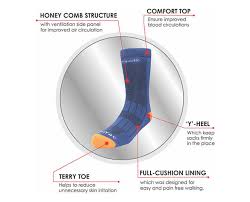
- Cushioning and Protection: Diabetic socks offer extra cushioning and padding, protecting the feet from pressure points and reducing the risk of blisters and ulcers.
- Friction Reduction: Socks with smooth and seamless construction minimize friction and reduce the likelihood of developing sores or blisters.
- Enhanced Comfort: Diabetic socks are made of soft and non-irritating materials, ensuring comfort throughout the day.
- Proper Fit: Diabetic socks are designed to fit snugly without constricting the feet, promoting proper circulation and reducing the risk of foot complications.
- Non-Binding Tops: Socks with non-binding tops prevent restriction of blood flow and reduce the risk of forming pressure sores.
- Improved Blood Circulation: Socks with graduated compression can aid in promoting blood circulation in the feet.
- Wound Protection: Socks act as a barrier between the feet and the environment, protecting any existing wounds or ulcers from further damage.
- Odor Control: Some diabetic socks are made with antimicrobial properties that help control odor-causing bacteria.
- Diabetic Neuropathy Management: Socks with extra padding and cushioning can provide relief for individuals experiencing diabetic neuropathy symptoms.
- Diabetes-Related Edema Management: Compression socks can help manage edema (swelling) in the feet caused by diabetes.
- Prevention of Skin Injuries: Socks protect the skin from external factors like rough surfaces, sharp objects, or accidental bumps.
- Improved Shoe Fit: Wearing socks ensures a better fit for shoes, reducing friction and preventing shoe-related foot problems.
- Prevention of Foot Complications: Consistently wearing diabetic socks can help prevent common foot complications associated with diabetes, such as ulcers, infections, and poor wound healing.
It’s important for diabetic patients to choose socks specifically designed for their needs, and to regularly check their feet for any signs of injury or infection. Proper foot care, including regular foot examinations by a healthcare professional, should be followed alongside wearing socks to ensure optimal foot health.
#DiabeticFootCare #DiabeticSocks #FootHealth #PreventionIsKey #MoistureControl #TemperatureRegulation #Cushioning #Protection #FootComplications #DiabetesManagement #DiabeticNeuropathy #WoundProtection #ComfortFirst #FootCareTips #HealthyFeet